
For airline procurement officers, 2026 is the year of “The Great Weight Audit.” With jet fuel accounting for up to 30% of operating costs and mounting pressure to hit IATA’s net-zero targets, the weight of every cabin amenity is under scrutiny.
Traditional “luxury” cotton towels are heavy, require significant water for laundering, and add substantial weight to the galley. Conversely, cheap synthetic wipes are light but generate massive volumes of non-recyclable “Cleaning Waste”. Wipeful offers the “Aviation Equilibrium”: a 100% biodegradable towel that provides the haptic feel of luxury linen at a fraction of the weight, while being fully compliant with new circular economy mandates.
The “Grams-to-Gallons” Equation
It is a direct law of physics: for every 1% reduction in aircraft weight, fuel use falls by approximately 0.75%.
When considering a long-haul fleet (e.g., Boeing 787 or Airbus A350), the difference between a standard saturated wipe and a Wipeful high-efficiency towel is roughly 4 grams per unit.
- The Math: On a flight with 300 passengers, that’s 1.2 kg saved.
- The Fleet Effect: Across a fleet of 50 aircraft flying twice daily, this eliminates over 43,000 kg of unnecessary payload per year.
- The ROI: This weight reduction can save an airline upwards of $50,000 in annual fuel costs per route, while simultaneously slashing CO2 emissions.
Solving the 5.7 Million Tonne Waste Crisis
According to IATA, the airline industry produced nearly 6 million tonnes of cabin waste annually pre-2026. A significant portion of this is “International Catering Waste” (ICW). Because many countries view in-flight waste as a biohazard due to animal health concerns, most cabin waste—including plastic-lined wipes—is sent directly to incineration or deep landfill.
Wipeful’s Compliance Advantage: By utilizing 100% biodegradable and plastic-free packaging, Wipeful towels fall into a lower-risk waste category in many jurisdictions.
- Compostable Potential: Where local regulations allow (such as the EU’s “Smarter Waste” initiative), our towels can be diverted from the “High-Risk” incinerator and moved into industrial composting streams.
- Reduced “Littering Levies”: Under the 2026 EU Packaging Regulation (PPWR), airlines are being charged “Producer Responsibility” fees for every gram of plastic they bring into European airspace. Switching to Wipeful’s plastic-free substrate removes this financial liability.
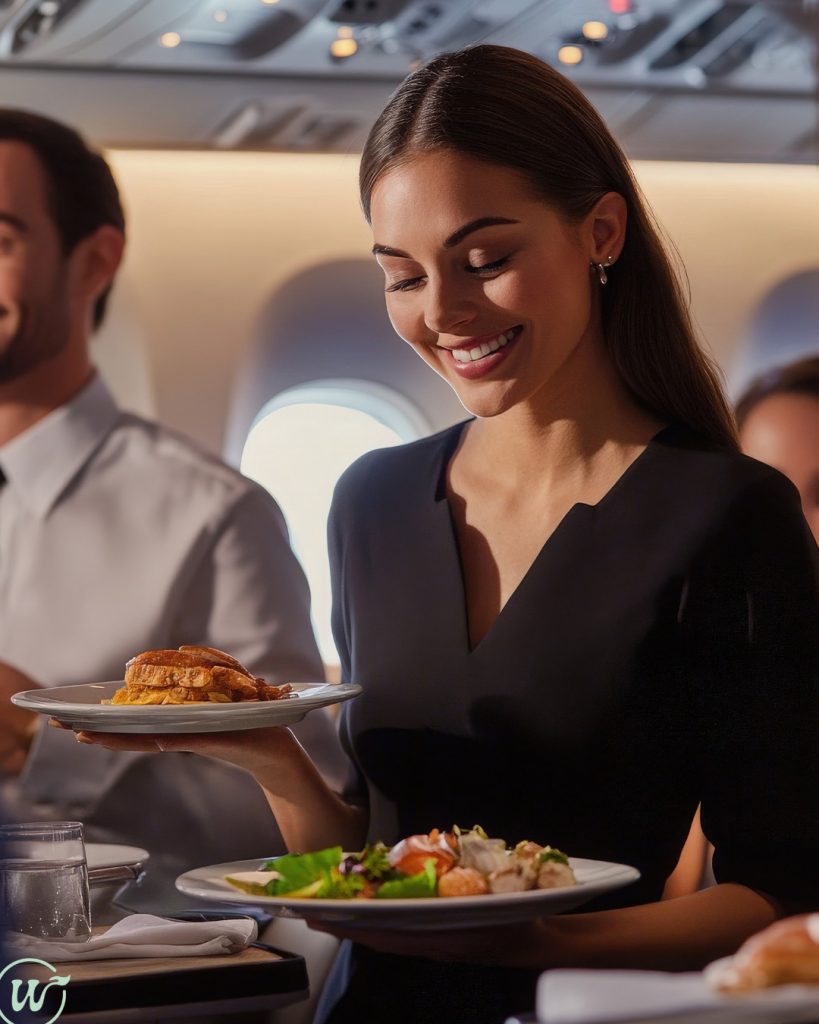
Sensory Branding in the Sky: First & Business Class
In the “silent” environment of a premium cabin, the tactile experience is amplified.
- The Problem with Synthetics: Plastic wipes feel cold, thin, and “cheap,” which clashes with a $5,000 Business Class ticket.
- The Wipeful Solution: Our 50 GSM wood-pulp material has a natural, textile-like drape. When saturated with our Highland Forest or Bergamot scents, it serves as a “Haptic Anchor”—signaling to the passenger that their transition from the stress of boarding to the comfort of the flight is complete.
Private Aviation: The “Zero-Waste” Executive Jet
For the private charter market (NetJets, VistaJet, etc.), the priority in 2026 is Ultra-Personalization + Sustainability. High-net-worth individuals (HNWIs) are increasingly sensitive to the environmental impact of private travel, which is 5–14 times more polluting per passenger than commercial. Providing a custom-branded, 100% compostable Wipeful towel allows private operators to maintain five-star luxury while demonstrating a commitment to the Sustainable Aviation Fuel (SAF) era’s greener values.
Procurement Checklist for 2026 Airline Amenities
Airlines must ensure their suppliers meet the following 2026 standards:
- Monomaterial Packaging: Is the sachet recyclable or compostable alongside the wipe?
- SDS Compliance: Does the formula meet international aviation safety standards for non-flammability?
- FSC Chain of Custody: Can the airline prove the wood-pulp didn’t contribute to deforestation?
Conclusion: Elevating the Bottom Line
In 2026, the best amenity is the one that delights the guest while disappearing from the balance sheet. By optimizing for weight and complying with global waste mandates, Wipeful helps airlines turn a “disposable cost” into a “sustainability win.”